Walter Calvo
Friday Note: The Presence That Was Doing the Forming
On the practice and who was present for it.
Camino Institute™ - A Transformation Practice
This week the leadership field circled a real worry. As artificial intelligence absorbs the routine work that once filled a young professional’s first years, people are asking where the next generation of judgment will come from. The worry is sound. What is disappearing, though, is not mainly the practice. It is the people who were present while that practice happened.
We are social by construction, not by preference. The clearest proof is in how the absence of others wounds us. Isolation is among the most severe punishments we impose on a person who is already imprisoned, a deprivation we reserve for when we want to break someone. A child left without present adults does not simply learn less. Their development bends. Even a dog, left alone too long, comes apart in ways its food bowl cannot fix. Presence is not an amenity layered on top of a functioning self. It is one of the conditions under which a self functions at all.
There is an old finding most people have never heard of and the rest have learned to distrust. Decades ago, researchers studying factory workers noticed that output rose simply because the workers knew they were being observed. The result became a cautionary tale, the Hawthorne effect, a contamination to design out of good research. But turn it over and look at what it actually shows. People became more capable when someone was paying attention to them. Attention was not noise in the experiment. Attention was the thing that changed who the workers were while it lasted.
That is the part the current worry keeps stepping over. The first years of a career were never only a place to accumulate repetitions. They were years spent in the presence of people who were paying attention, and who a person became in that company was the actual yield. A manager noticed an instinct the junior could not yet name and named it for them. Someone further along hesitated visibly before a hard call, and the hesitation taught more than any framework. The reps were real, but the reps were not the mechanism. The presence was there.
This is why presence does its work at every scale at once. It lifts a single exchange, the way a person speaks more carefully to someone genuinely listening. It is the whole of what we mean by a culture, which is nothing more than people reliably present to one another in a particular way. And beneath both, quietly, it is how a person is built. Identity forms in the company of others, through who was there while we became.
None of this is an argument against what is being built. A well-made system can offer more practice, faster, with more feedback than any single person could provide, and that is a real gain worth taking. The work ahead is only to keep from mistaking the efficiency for the thing itself. Presence was never the overhead of formation. It was the part doing the forming.
So the question worth carrying out this week is not how to restore the repetitions. It is who will be present while the next generation becomes who they are going to be. We have always known, in every other corner of our lives, that no one becomes themselves alone. The arrival of capable machines has only made it possible to see how much of that becoming was never the work at all.
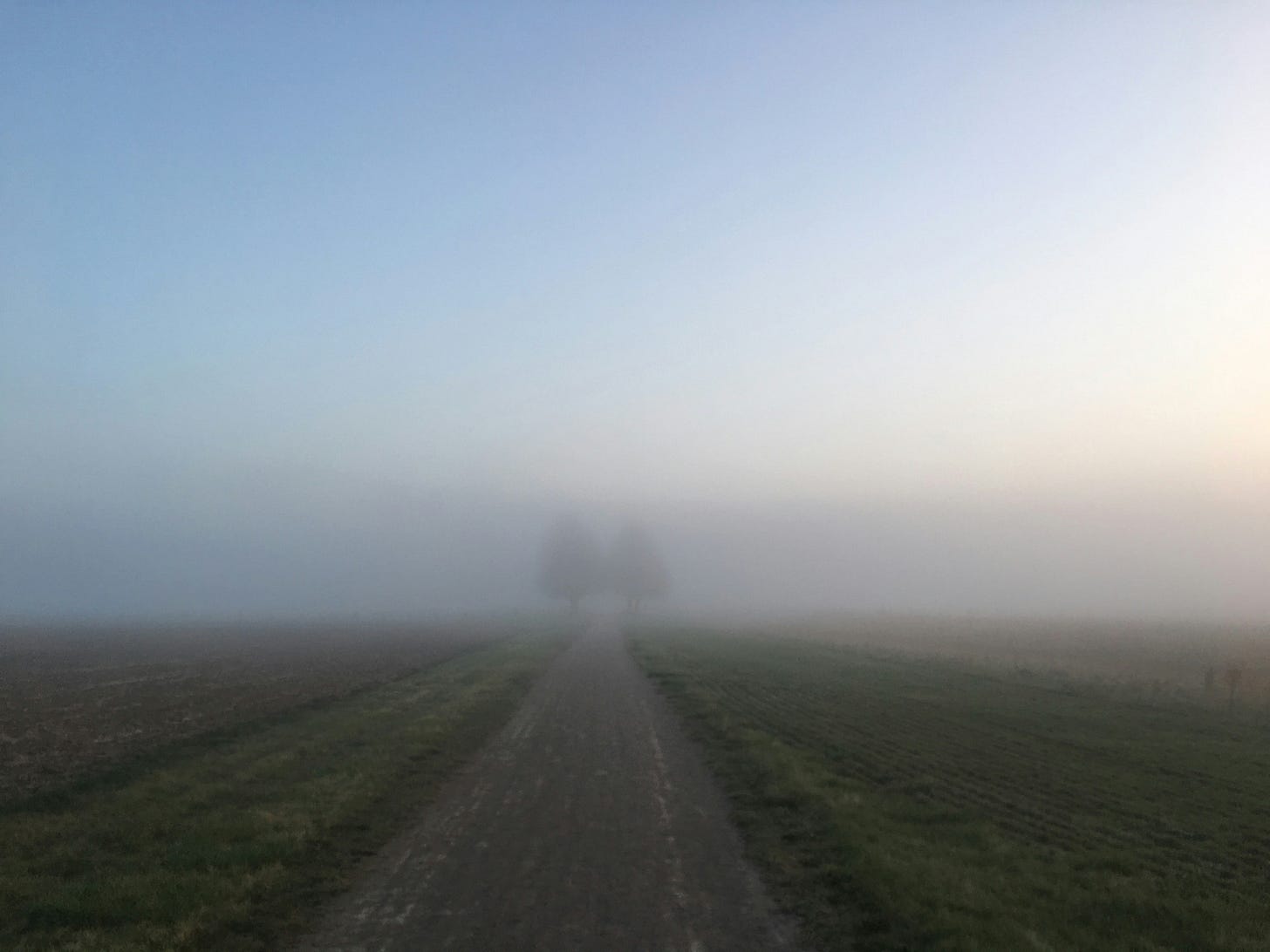
The photograph above has not changed. You have. What is it saying now?
Walter Calvo, LCSW, DBA, Founder and Clinical Director, Camino Institute.